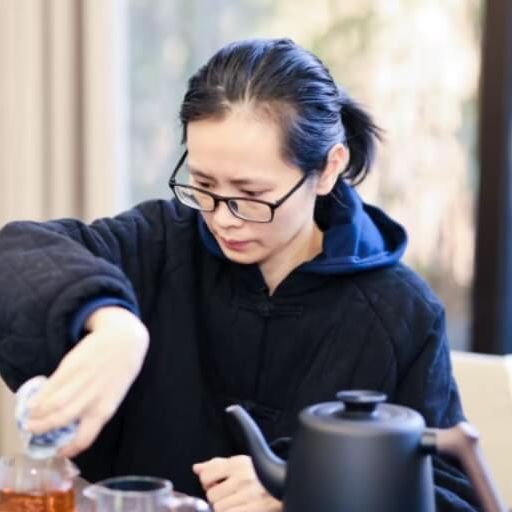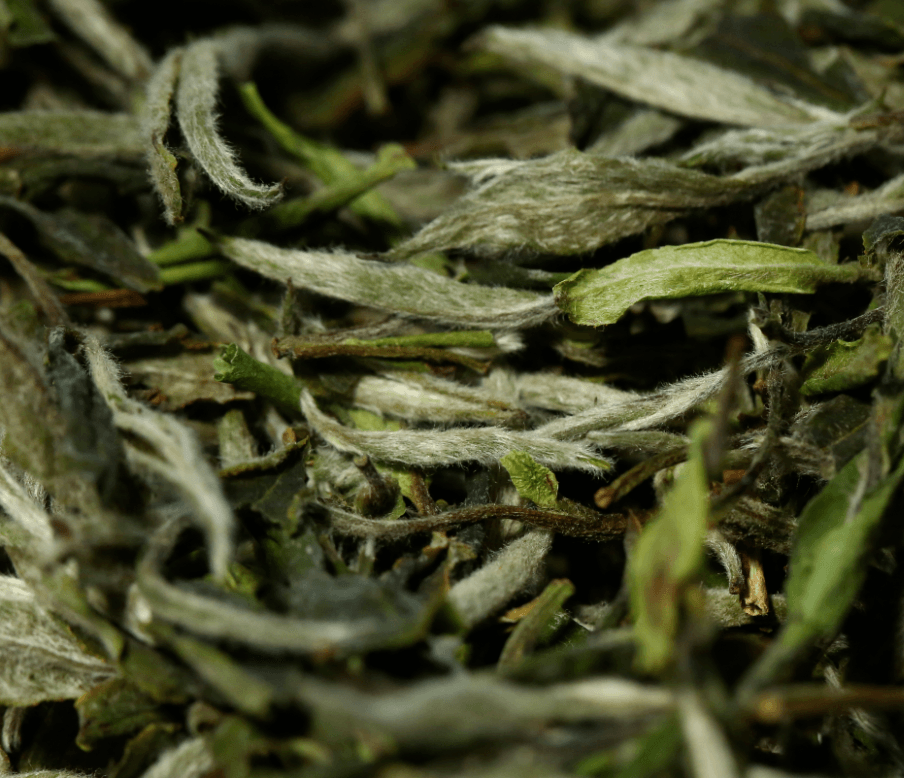
White tea is one of China’s six main tea categories. For beginners, the simplest way to understand it is this: white tea is a lightly processed tea made from Camellia sinensis leaves and buds, usually with only withering, drying, and sorting.
It is often described as delicate, soft, and lightly sweet. In Chinese tea culture, it is valued not because it is the most dramatic tea, but because it often feels the most restrained.
White Tea in One Minute
| Question | Short Answer |
|---|---|
| What is white tea? | A lightly processed Chinese tea made from tea buds, leaves, or tender stems |
| How is it made? | Mainly withering, drying, and sorting |
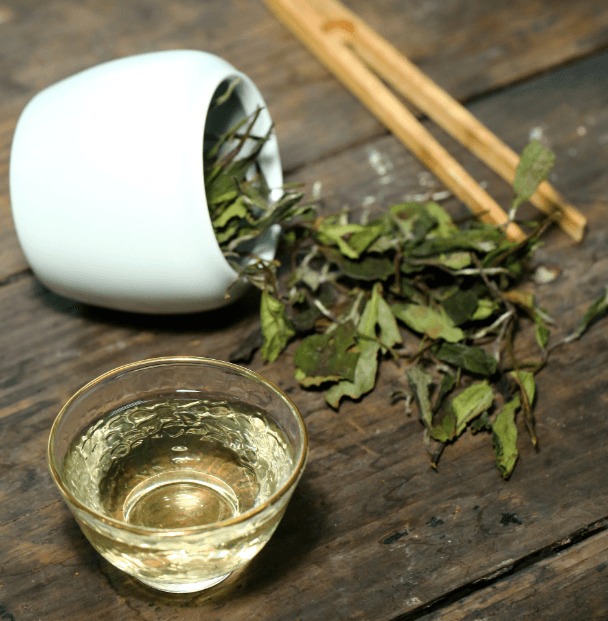
| What does it taste like? | Soft, floral, honey-like, hay-like, or gently fruity |
| Is it oxidized? | Lightly oxidized during withering, but far less processed than black tea |
| Is it always pale in color? | Usually yes, but aged white tea can look darker |
| Is it herbal tea? | No. It comes from the tea plant, Camellia sinensis |
How White Tea Is Defined in China
In China, tea is usually classified by processing style rather than by color alone. White tea is one of the six standard tea categories: green, white, yellow, oolong, black, and dark tea.[1][10]
The current Chinese national standard, GB/T 22291-2017, defines white tea as tea made from tea buds, leaves, or tender stems through specific steps including withering, drying, and sorting.[1]
For Western readers, this matters because GB/T is a Chinese national standard system. It is similar in spirit to industry standards or product norms in other countries, even though it is not the same as FDA or EU labeling law.
Why It Is Called White Tea
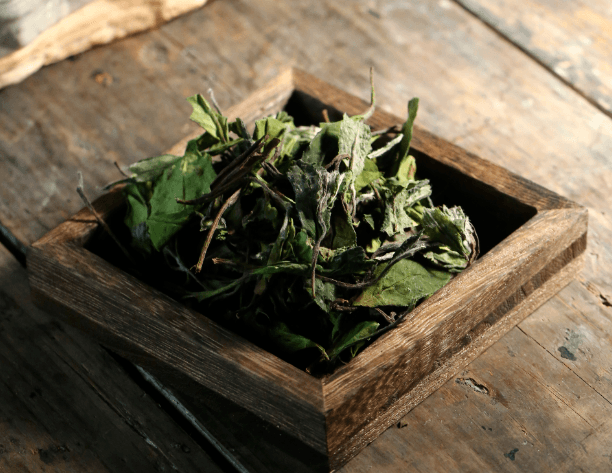
The name does not mean the tea is white like milk or jasmine petals.
It usually refers to the pale silvery down on young buds, which gives some white teas a frosted look. That appearance is especially visible in teas like Silver Needle.
How White Tea Is Made
White tea is known for being minimally processed, but “minimal” does not mean “no change.”
| Step | What Happens |
|---|---|
| Plucking | Young buds or leaves are harvested |
| Withering | Leaves lose moisture slowly and internal chemistry shifts |
| Drying | Moisture is reduced further |
| Sorting | Leaf grade and style are separated |
Scientific studies show that withering changes white tea’s nonvolatile compounds, including free amino acids, caffeine, catechins, and flavonoid-related substances.[3][6] In other words, white tea is not simply dried leaf. It is a tea whose flavor is shaped by gentle, slow transformation.
Main Types of White Tea
According to the 2017 Chinese standard, white tea includes four main styles: Silver Needle, White Peony, Gongmei, and Shoumei.[1]
| Style | Leaf Material | Typical Character | Beginner Note |
|---|---|---|---|
| Silver Needle | Single buds | Delicate, refined, subtle | Best if you like very light tea |
| White Peony | Bud plus one or two leaves | Fuller than Silver Needle | Often the easiest entry point |
| Gongmei | Tender shoots from group-variety tea plants | More leaf-forward, slightly fuller | Good daily tea |
| Shoumei | Buds and more mature leaves | Richer, deeper, more forgiving | Best for aging and casual brewing |
White Tea vs Green Tea
Beginners often confuse white tea with green tea because both are relatively light compared with black or dark tea.
| Feature | White Tea | Green Tea |
|---|---|---|
| Processing | Minimal, mainly withering and drying | Usually fixed, rolled, and dried |
| Flavor | Soft, gentle, floral, mellow | Fresh, grassy, vegetal, sometimes nutty |
| Heat sensitivity | Moderate | High |
| Aging potential | Often better than green tea | Usually best when fresh |
| Brewing style | Gentle, flexible | Needs more careful temperature control |
What White Tea Tastes Like
A good white tea usually feels calm rather than loud.
| Common Note | What It Feels Like |
|---|---|
| Hay or straw | Light, dry, clean aroma |
| Honey | Soft sweetness in the finish |
| Floral | Delicate, not perfumed |
| Dried fruit | Especially in aged white tea |
| Herb-like | More common in leafier grades like Shoumei |
A study comparing Fuding white teas found that catechins, caffeine, theanine, free amino acids, and water extracts all contribute to taste differences among Silver Needle, White Peony, and Shoumei.[3]
Does White Tea Have Health Benefits?
White tea is often discussed in health-focused writing because it contains compounds that have been studied for antioxidant-related activity. That said, it should not be presented as medicine.
A safer and more accurate way to say it is this:
- White tea contains tea polyphenols, amino acids, and other bioactive compounds.
- These compounds have been studied for antioxidant and other potential health-related properties.
- Human evidence is still limited, and tea should not be treated as a treatment or cure.[5]
That is the AdSense-safe version, and it is also the scientifically honest one.
The 2017 Standard Changes in Plain English
The 2017 revision of GB/T 22291 matters because it clarified how white tea is defined in the market.
| Change | What It Means in Practice |
|---|---|
| Moisture limit increased to 8.5% | The finished tea standard allows slightly more residual moisture than the older 7% rule |
| Shoumei was added as a formal category | Buyers and sellers have a clearer product structure |
| Storage linked to GB/T 30375 | White tea storage should follow general tea storage rules |
A recent storage study notes that GB/T 22291-2017 requires white tea moisture to be no more than 8.5%.[4]
For buyers, this means storage matters more than many people think. White tea that feels damp, soft, or musty should be checked carefully.
Why Storage Matters
Tea is a dry food. Moisture changes both flavor and shelf life.
| Moisture Level | Typical Risk |
|---|---|
| Below about 5% | Better for long, dry storage |
| Around 8% | Flavor may start to shift noticeably over time |
| Around 10% | Higher risk of off-odors and quality loss |
| Around 12% | Mold risk rises sharply |
Tea storage standards in China are covered by GB/T 30375-2013 Tea storage.[7] For everyday use, the practical advice is simple:
- Store white tea in a dry place.
- Keep it away from kitchen steam and strong odors.
- Use airtight packaging or a sealed container.
- Recheck stored tea periodically.
A Note on “One-Year Tea, Three-Year Medicine, Seven-Year Treasure”
This saying is widely repeated in China, but it should be understood as a cultural saying, not a medical rule.
What science can support is simpler:
- White tea changes during storage.
- Aroma can deepen.
- Flavor can become smoother.
- Some compounds shift over time.[4][6]
So it is better to say:
Well-stored white tea can become rounder, deeper, and more mellow with age.
White Tea in Classical Chinese Texts
White tea also has a historical and literary dimension.
The Song dynasty text Da Guan Cha Lun (大觀茶論) includes a chapter on white tea.[8] For modern readers, this matters because it shows that “white tea” was already a meaningful category in Chinese tea culture many centuries ago.
Important note: the white tea discussed in Song texts is not exactly the same product as modern Fuding white tea. Classical texts help explain tea history, but they should not be used as direct proof of modern quality claims.
Lu Yu’s Chajing (茶經, The Classic of Tea) is another foundational text in Chinese tea history.[9] It helped establish tea as a serious cultural subject, not just a drink. That is why Chinese tea writing still often mixes craftsmanship, geography, and philosophy.
How to Brew White Tea
White tea is forgiving if you keep the brewing gentle.
| Tea Style | Water Temperature | Ratio | First Steep |
|---|---|---|---|
| Silver Needle | 85-90°C / 185-194°F | 1:40 to 1:50 | 30-60 seconds |
| White Peony | 90°C / 194°F | 1:30 to 1:40 | 20-45 seconds |
| Shoumei | 90-100°C / 194-212°F | 1:20 to 1:35 | 20-60 seconds |
| Aged white tea | 95-100°C / 203-212°F | 1:15 to 1:25 | Short gongfu steeps or boiling |
If the tea tastes too thin, use slightly more leaf. If it tastes harsh, reduce the steep time first.
How to Buy White Tea
A simple buying checklist:
| What to Check | Why It Matters |
|---|---|
| Style name | Silver Needle, White Peony, Gongmei, or Shoumei |
| Harvest year | Especially important for aged white tea |
| Origin | Fuding and Zhenghe are well-known regions |
| Leaf appearance | Should look dry, clean, and not damp |
| Storage note | Good sellers often mention dry storage or aging conditions |
For beginners, White Peony or a well-stored Shoumei is often easier to enjoy than expensive Silver Needle.
FAQ
Is white tea really the least processed tea?
It is one of the least processed Chinese tea categories, but “least processed” is better than “unprocessed.” The leaves still undergo important chemical change during withering and drying.
Is aged white tea always better?
No. Aging can improve some teas, but only if storage is clean and dry. Bad storage ruins tea.
Is white tea caffeine-free?
No. White tea still contains caffeine, though levels vary by style, leaf grade, and brewing method.
Can I drink white tea every day?
For most people, yes, as a normal beverage. If you are sensitive to caffeine, keep portions moderate.
Final Thought
White tea is quiet tea.
It does not need heavy roasting, aggressive rolling, or dramatic processing to be interesting. Its appeal comes from restraint: soft aroma, gentle sweetness, and the way it changes slowly over time.
If you want one sentence to remember, use this:
White tea is Chinese tea at its most understated.
References
- Standardization Administration of China. National Standard|GB/T 22291-2017.
- Ma C-L, Chen L, Wang X-C, Jin J-Q, Ma J-Q, Yao M-Z, Wang Z-L. Differential expression analysis of different albescent stages of 'Anji Baicha' (Camellia sinensis (L.) O. Kuntze) using cDNA microarray.
- Pan J, Jiang Y, Lv Y, Li M, Zhang S, Liu J, Zhu Y, Zhang H. Comparison of the main compounds in Fuding white tea infusions from various tea types.
- Optimization of storage conditions for Zhenghe white tea: Effects of temperature and humidity on sensory and physiochemical qualities over one-year storage.
- Abiri B, Amini S, Hejazi M, Valizadeh M. Tea's anti-obesity properties, cardiometabolic health-promoting potentials, bioactive compounds, and adverse effects: A review focusing on white and green teas.
- Wang Z, Gao C, Zhao J, Zhang J, Zheng Z, Huang Y, Sun W. The metabolic mechanism of flavonoid glycosides and their contribution to the flavor evolution of white tea during prolonged withering.
- Standardization Administration of China. National Standard|GB/T 30375-2013 Tea storage.
- Chinese Text Project. Da Guan Cha Lun (大觀茶論) - Chinese Text Project.
- Chinese Text Project. Chajing 茶經 - Chinese Text Project.
- UNESCO Intangible Cultural Heritage. Traditional tea processing techniques and associated social practices in China.