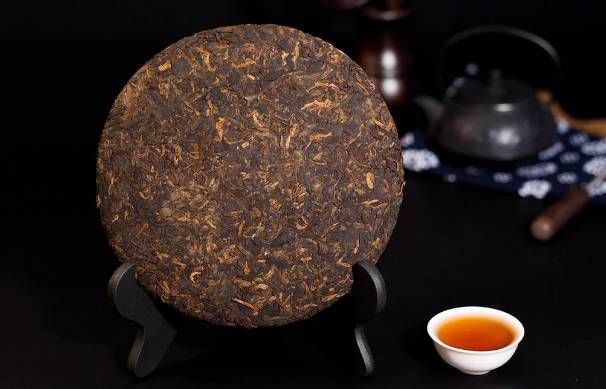
Pu-erh tea is a post-fermented tea associated with Yunnan, China. It is usually made from Yunnan large-leaf tea varieties and processed from sun-dried green tea material known as shaiqing maocha. Reviews of Pu-erh processing describe it as a microbial fermented tea produced from sun-dried leaves of Yunnan large-leaf tea varieties.[1][6]
For beginners, the most important thing to know is this:
Pu-erh is not one flavor. It is a whole category with two major styles: raw Pu-erh, called sheng, and ripe Pu-erh, called shou.
Raw Pu-erh can taste bright, bitter, floral, smoky, fruity, or aged and woody. Ripe Pu-erh is usually darker, smoother, earthier, and more immediately mellow.
Pu-erh Tea in One Minute
| Question | Short Answer |
|---|---|
| What is Pu-erh? | A Yunnan post-fermented tea made from sun-dried large-leaf tea material |
| Main types | Raw Pu-erh, or sheng, and ripe Pu-erh, or shou |
| Common forms | Cake, brick, tuocha nest, loose tea |
| Typical flavor | Raw: fresh, bitter, floral, aged; ripe: earthy, smooth, woody |
| Does it contain caffeine? | Yes |
| Can it age? | Yes, if stored properly |
| Is older always better? | No. Storage quality matters more than age alone |
How China Officially Defines Pu-erh Tea
In China, Pu-erh tea has a geographical indication standard: GB/T 22111-2008 Product of Geographical Indication: Pu’er Tea.[1]
For Western readers, this means Pu-erh is not just a romantic tea name. It is also a regulated regional product category in China. The standard covers protected production areas, definitions, types, grading, packaging, transport, and storage.
A practical beginner definition is:
Pu-erh tea is made from Yunnan large-leaf sun-dried tea material and is processed into either raw Pu-erh or ripe Pu-erh, often in compressed forms that can continue changing during storage.
Is Pu-erh a Dark Tea?
In English, Pu-erh is often described as a dark tea because it is post-fermented. In Chinese tea classification, dark tea is called hei cha.
However, Pu-erh also has its own legal and cultural identity because of its Yunnan origin, processing method, and geographical indication standard.[1][6]
The beginner-safe answer is:
Pu-erh is commonly treated as a post-fermented dark tea, but it is also a distinct Yunnan tea category with its own Chinese product standard.
Sheng vs Shou Pu-erh
Pu-erh is divided into two major styles.
| Type | Chinese Term | Processing | Typical Flavor |
|---|---|---|---|
| Raw Pu-erh | Sheng cha | Sun-dried maocha, often compressed, then aged naturally | Bright, bitter, floral, fruity, woody with age |
| Ripe Pu-erh | Shou cha | Sun-dried maocha plus controlled pile fermentation | Earthy, smooth, dark, mellow |
A microbiome study explains that ripe Pu-erh was developed to shorten the aging process needed for raw Pu-erh, using an additional microbial pile-fermentation step.[2]
What Is Raw Pu-erh?
Raw Pu-erh, or sheng Pu-erh, starts with Yunnan sun-dried maocha. It may be sold loose or steamed and pressed into cakes, bricks, or tuocha.
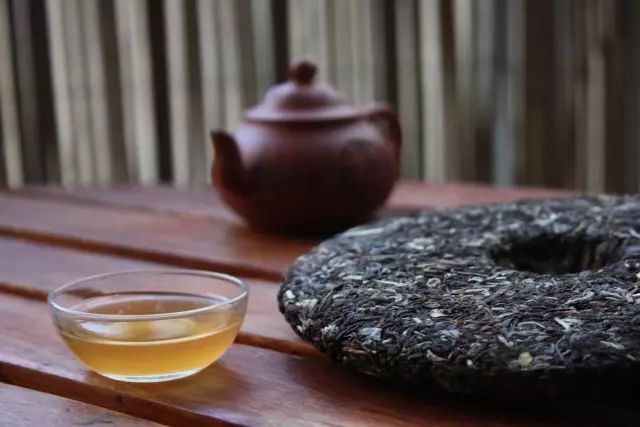
Young raw Pu-erh can be intense. It may taste bitter, astringent, grassy, floral, smoky, or sweet depending on origin and processing. Over time, if stored well, raw Pu-erh can become deeper, smoother, and more complex.
| Young Raw Pu-erh | Aged Raw Pu-erh |
|---|---|
| Greenish or dark green leaves | Brown, olive, or darker leaves |
| Yellow to orange liquor | Orange, amber, or reddish liquor |
| Strong bitterness possible | Softer bitterness, deeper sweetness |
| Fresh, floral, vegetal notes | Woody, dried fruit, camphor-like, medicinal notes |
What Is Ripe Pu-erh?
Ripe Pu-erh, or shou Pu-erh, is made with a controlled process called wo dui, usually translated as pile fermentation.
In this process, tea is moistened and piled under managed heat and humidity so microbial activity can transform the tea more quickly. Scientific reviews describe fungi and other microorganisms as important contributors to the flavor and quality formation of Pu-erh during pile fermentation.[3]
| Ripe Pu-erh Feature | What It Means |
|---|---|
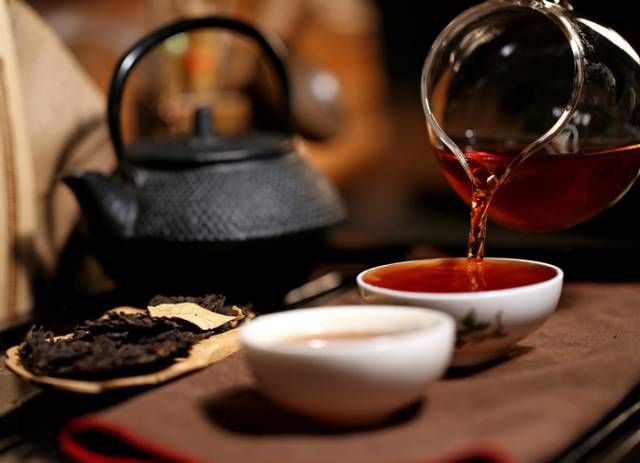
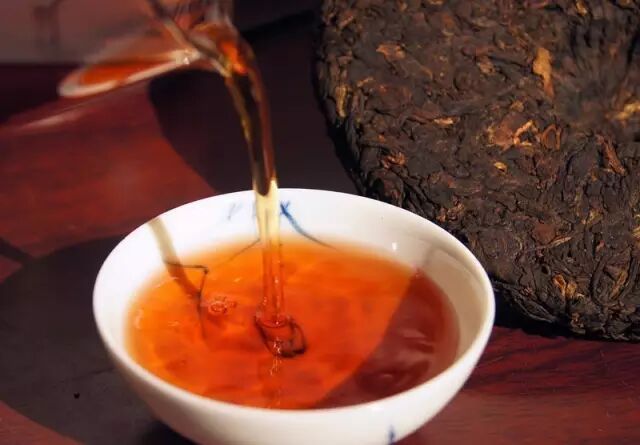
| Dark tea liquor | Usually reddish brown to dark brown |
| Earthy aroma | Normal if clean, but should not smell rotten |
| Smooth texture | Often easier for beginners than young raw Pu-erh |
| Less sharp bitterness | Pile fermentation softens the tea |
A good ripe Pu-erh should smell clean, warm, woody, earthy, or date-like. It should not smell moldy, fishy, sour, or dirty.
How to Tell Raw and Ripe Pu-erh Apart
| Feature | Raw Pu-erh | Ripe Pu-erh |
|---|---|---|
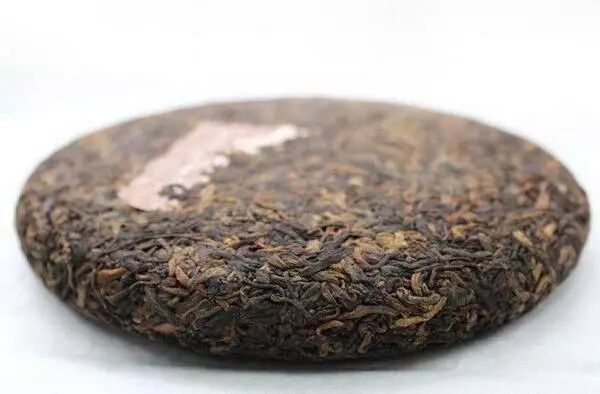
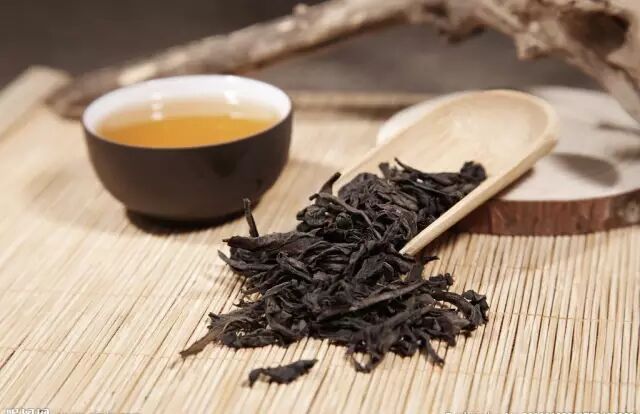
| Dry leaf color | Green, olive, brown with age | Dark brown to black-brown |
| Aroma | Fresh, floral, smoky, woody with age | Earthy, woody, jujube-like, mellow |
| Liquor color | Yellow, orange, amber, red with age | Red-brown, dark amber, deep brown |
| Taste | Bitter, astringent, sweet aftertaste | Smooth, earthy, thick, low bitterness |
| Aging style | Changes slowly over years | Already transformed by pile fermentation |
Do not judge only by color. Some aged raw Pu-erh can become quite dark, and some lighter-fermented ripe Pu-erh may not look extremely black.
Chemical studies comparing aged raw Pu-erh and ripened Pu-erh have found differences in catechins, gallic acid, caffeine, and other compounds, which helps explain why the two styles can taste and age differently.[7]
What Is Shaiqing Maocha?
Shaiqing maocha means sun-dried rough tea material.
This is the raw material for Pu-erh. Fresh leaves are typically fixed, rolled, and sun-dried. The drying method matters because traditional Pu-erh relies on sun-dried material that can continue changing during storage.[1][6]
| Term | Meaning |
|---|---|
| Shaiqing | Sun-dried |
| Maocha | Rough tea material before final sorting or pressing |
| Bingcha | Cake tea |
| Zhuancha | Brick tea |
| Tuocha | Bowl-shaped compressed tea |
A tea dried with high-temperature baking may taste fragrant when fresh, but it is not the traditional foundation for ageable Pu-erh.
What Are the Ancient Six Tea Mountains?
The “Ancient Six Tea Mountains” are traditional names often used in Pu-erh culture. They are commonly listed as:
| Chinese Name | Common English Rendering |
|---|---|
| Youle | Youle |
| Gedeng | Gedeng |
| Yibang | Yibang |
| Mangzhi | Mangzhi |
| Manzhuan | Manzhuan |
| Mansa / Yiwu | Mansa / Yiwu area |
These names are important in Pu-erh culture, but beginners should not treat mountain names as automatic proof of quality. Famous origins are frequently copied or exaggerated.
UNESCO’s World Heritage listing for the old tea forests of Jingmai Mountain in Pu’er shows how deeply tea cultivation is connected with Yunnan’s landscape and local communities.[4] This supports the broader cultural and ecological importance of Yunnan tea landscapes, not every market claim about famous mountain names.
Spring Tea, Summer Tea, and Autumn Tea
Pu-erh buyers often discuss harvest season.
| Season | Chinese Term | Typical Character |
|---|---|---|
| Spring | Chun cha | Often fuller, more aromatic, more valued |
| Summer / rainy season | Yu shui cha | Can be lighter or less concentrated |
| Autumn | Gu hua cha | Often fragrant, balanced, good value |
Spring tea is often prized, but harvest season alone does not determine quality. Processing, storage, cultivar, garden ecology, and vendor honesty all matter.
Pu-erh Grading: Higher Grade Does Not Always Mean Better
Pu-erh grades often refer to leaf tenderness.
| Grade Style | What It Usually Means |
|---|---|
| Higher grade | More buds and tender leaves |
| Lower grade | Larger leaves and more stems |
| Gongting | Very small tender material, often used in ripe Pu-erh |
| Huangpian | Larger yellow leaves, often sweet and affordable |
A higher grade is not automatically better. Tender leaves may be aromatic, but larger leaves can give sweetness, body, and aging potential.
Dry Storage vs Wet Storage
Storage is one of the most important Pu-erh topics.
| Storage Style | Meaning | Risk |
|---|---|---|
| Dry storage | Slower aging in cleaner, lower-humidity conditions | May need more time |
| Wet storage | Faster aging in higher humidity | Higher risk of musty or moldy flavors |
| Bad storage | Damp, dirty, moldy, or odor-contaminated storage | Avoid |
The old saying “the older, the better” is incomplete. A better version is:
Well-made Pu-erh can improve with age only if storage is clean, stable, and appropriate.
Tea should not smell like basement mold, mildew, sewage, rotten wood, or sour cloth. If it does, do not drink it.
How to Store Pu-erh at Home
| Rule | Why It Matters |
|---|---|
| Keep it dry but not bone-dry | Prevents mold while allowing gradual aging |
| Avoid strong odors | Tea absorbs smells easily |
| Avoid direct sunlight | Light can damage aroma and quality |
| Keep airflow gentle | Prevents stale or trapped odors |
| Do not refrigerate | Fridge odors and condensation can harm tea |
For compressed tea, keep the wrapper if it is clean and dry. For loose ripe Pu-erh, use a clean paper bag, cardboard box, ceramic jar, or breathable storage container.
Common Pu-erh Buying Mistakes
| Mistake | Why It Is Risky |
|---|---|
| Buying only by age | Fake age claims are common |
| Trusting old-looking wrappers | Packaging can be copied |
| Assuming dark color means old tea | Ripe Pu-erh is dark because of fermentation |
| Chasing famous mountains first | Famous names are often overpriced or mislabeled |
| Believing extreme health claims | Tea is a beverage, not medicine |
| Buying very cheap “ancient tree” tea | True old-tree material is limited and expensive |
A trustworthy seller should explain origin, year, raw vs ripe style, storage, and brewing method.
What Does a Pu-erh Recipe Number Mean?
Some factory Pu-erh teas use recipe numbers, often called mai hao. The explanation below reflects a commonly used factory-era convention, but modern numbering can vary by producer.
A classic example is 7542.
| Digit | Meaning |
|---|---|
| 75 | Recipe first developed in 1975 |
| 4 | Average leaf grade |
| 2 | Factory code, traditionally Menghai Tea Factory |
Important: 7542 does not mean the tea was made in 1975. It refers to the recipe origin.
Traditional factory codes include:
| Code | Factory |
|---|---|
| 1 | Kunming Tea Factory |
| 2 | Menghai Tea Factory |
| 3 | Xiaguan Tea Factory |
| 4 | Pu’er Tea Factory |
Modern numbering can be less consistent, so treat recipe numbers as clues, not proof.
Does Pu-erh Have Health Benefits?
Pu-erh tea contains caffeine, polyphenols, amino acids, pigments, organic acids, polysaccharides, and fermentation-related compounds. Reviews have studied Pu-erh’s chemical constituents and possible biological activities.[5]
However, many strong health claims about Pu-erh are overstated.
Avoid claims such as:
- “Pu-erh cures diabetes.”
- “Pu-erh melts fat.”
- “Pu-erh treats stomach disease.”
- “Pu-erh detoxes the body.”
- “Pu-erh prevents cancer.”
A more accurate, AdSense-safe version is:
Pu-erh contains bioactive compounds that have been studied in laboratory, animal, and some human research, but it should be enjoyed as tea, not used as a treatment for medical conditions.
If you are pregnant, caffeine-sensitive, taking medication, or managing a medical condition, ask a qualified health professional before using strong tea daily.
What Is “Crab’s Feet” in Pu-erh Culture?
“Crab’s feet,” or pangxiejiao, refers to a parasitic plant sometimes found growing on older tea trees. It is not Pu-erh tea itself.
In tea markets, it is sometimes sold as a novelty or brewed separately. Some sellers make strong medicinal claims about it, but beginners should be cautious. Do not treat it as medicine, and do not buy it unless the source is clearly identified and safe.
How to Brew Pu-erh Tea
Pu-erh is commonly brewed in a gaiwan, small teapot, or simple infuser cup.
| Tea Type | Water Temperature | Tea Amount | First Steep |
|---|---|---|---|
| Young raw Pu-erh | 90-95°C / 194-203°F | 5 g per 100 ml | 5-10 seconds |
| Aged raw Pu-erh | 95-100°C / 203-212°F | 5-7 g per 100 ml | 10-15 seconds |
| Ripe Pu-erh | 95-100°C / 203-212°F | 5-7 g per 100 ml | 10-20 seconds |
| Casual mug brewing | 95-100°C / 203-212°F | 3-5 g per large mug | 2-5 minutes |
Many Pu-erh drinkers rinse the leaves briefly before the first infusion, especially for ripe or compressed tea. A rinse is not magic. It simply wakes the leaves, removes some loose dust, and warms the vessel.
Beginner Brewing Steps
- Break off a small piece of tea if using a cake.
- Use 5 g tea for a 100 ml gaiwan.
- Rinse quickly with hot water and discard the rinse.
- Brew the first infusion for 10-15 seconds.
- Pour out fully.
- Add 5-10 seconds for later steeps.
If the tea is too bitter, shorten the steep. If it is too weak, use more leaf or hotter water.
Pu-erh Tasting Terms Explained
Appearance
| Term | Meaning |
|---|---|
| Visible down | Fine hairs on buds |
| Even | Similar leaf size and shape |
| Tight | Compressed or rolled firmly |
| Fat / plump | Thick buds or leaves |
Liquor Color
| Term | Meaning |
|---|---|
| Clear | Transparent, no heavy cloudiness |
| Bright | Lively, reflective tea liquor |
| Deep | Darker color |
| Cloudy | Suspended particles or poor clarity |
Aroma
| Term | Meaning |
|---|---|
| High aroma | Strong and lasting fragrance |
| Clean | No off-odors |
| Green note | Fresh grassy smell, common in young tea |
| Aged aroma | Woody or stored aroma from aging |
| High fire | Roasted or toasted smell |
Taste and Mouthfeel
| Term | Meaning |
|---|---|
| Hui gan | Sweet aftertaste returning after swallowing |
| Sheng jin | Salivation or mouth-watering sensation |
| Thick | Full-bodied tea soup |
| Smooth | Low roughness or harshness |
| Astringent | Drying mouthfeel |
| Bitter | Sharp bitterness on the tongue |
| Cha qi | A cultural term for the physical feeling or energy of tea |
“Cha qi” is not a scientific measurement. It is a traditional tasting word used by tea drinkers to describe body sensation, warmth, alertness, or perceived strength.
Leaf Bottom
| Term | Meaning |
|---|---|
| Soft | Leaves remain flexible after brewing |
| Bright | Healthy-looking brewed leaves |
| Mixed | Uneven age, grade, or processing |
| Burn marks | Possible high-heat processing damage |
Final Thoughts
Pu-erh is one of the most complex Chinese tea categories because it combines geography, fermentation, aging, storage, factory history, and tasting culture.
But beginners do not need to learn everything at once.
Start with two teas:
| Try This | To Understand |
|---|---|
| One clean ripe Pu-erh | Smooth, earthy, post-fermented flavor |
| One young or semi-aged raw Pu-erh | Brightness, bitterness, aroma, and aging potential |
Once you understand the difference between sheng and shou, Pu-erh becomes much easier to explore.
The best first Pu-erh is not the oldest, rarest, or most expensive one. It is the one that tastes clean, brews reliably, and makes you curious enough to try the next cup.
References
- Standardization Administration of China. National Standard|GB/T 22111-2008.
- Zhang L, et al. The Microbiome and Metabolites in Fermented Pu-erh Tea as Revealed by High-Throughput Sequencing and Quantitative Multiplex Metabolite Analysis.
- Xu J, Wei Y, Li F, Weng X, Wei X. Regulation of fungal community and the quality formation and safety control of Pu-erh tea.
- UNESCO World Heritage Centre. Cultural Landscape of Old Tea Forests of the Jingmai Mountain in Pu’er.
- Wang S, Qiu Y, Gan R-Y, Zhu F. Chemical constituents and biological properties of Pu-erh tea.
- Lv H-P, Zhang Y-J, Lin Z, Liang Y-R. Processing and chemical constituents of Pu-erh tea: A review.
- Zhang L, Li N, Ma Z-Z, Tu P-F. Comparison of the Chemical Constituents of Aged Pu-erh Tea, Ripened Pu-erh Tea, and Other Teas Using HPLC-DAD-ESI-MSn.