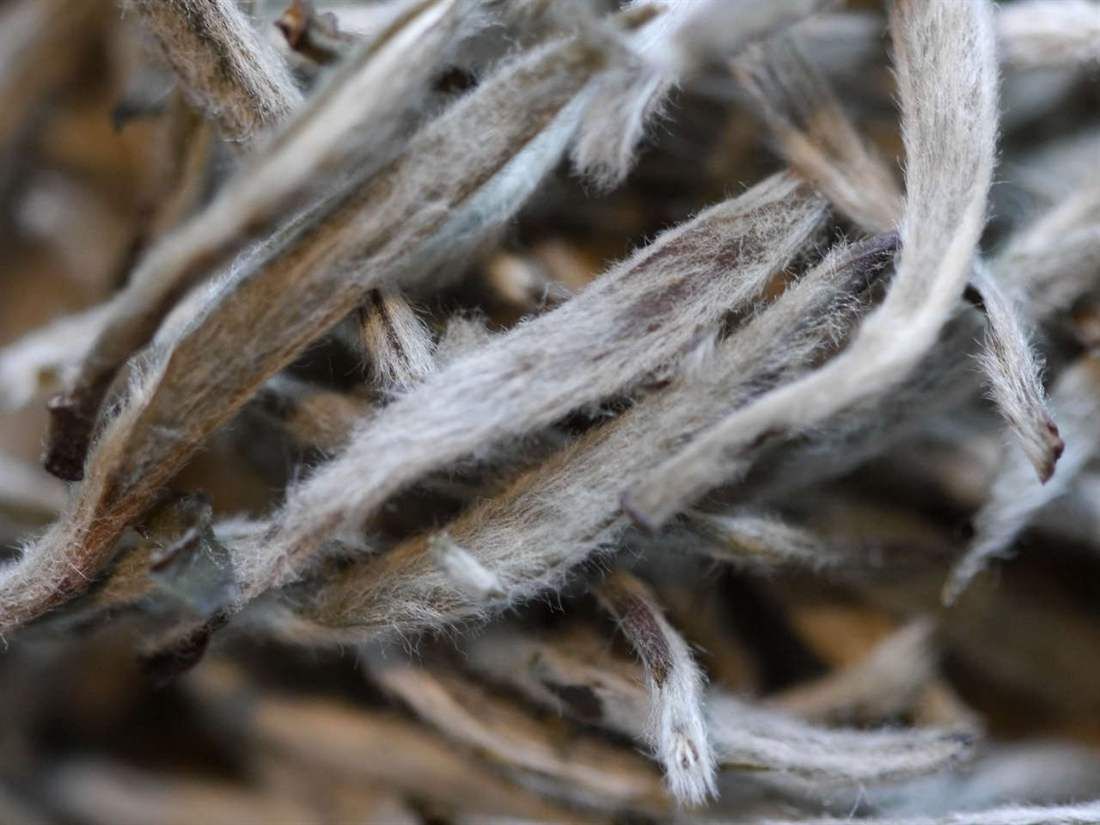
Baihao Yinzhen is often the tea that gives beginners their first image of premium white tea: fat buds, fine white hairs, pale liquor, a delicate aroma and a price that can feel intimidating.
But Silver Needle white tea cannot be understood only through the words "expensive" or "high grade."
The more useful questions are practical:
- What exactly is Baihao Yinzhen?
- How is it different from Baimudan, Gongmei and Shoumei?
- What do market names such as "Silver Needle King" or "hand-picked Silver Needle" actually mean?
- Is this tea worth buying if you are still new to Chinese tea?
This guide is based on a Chinese beginner video and checked against public information from China's national white tea standard, GB/T 22291-2017.
The Short Answer
| Question | Practical answer |
|---|---|
| What is Baihao Yinzhen? | A single-bud white tea, commonly called Silver Needle white tea in English. |
| Why is it expensive? | It uses tender buds, has a short harvest window, lower yield, high appearance requirements and strong market demand. |
| Is "Silver Needle King" an official grade? | Usually no. It is normally a product or marketing name, not a national-standard grade. |
| Is hand-plucked always much better than hand-stripped? | It usually costs more, but the drinking difference may be subtle for many people. |
| Is it beginner-friendly? | Yes if you like sweet, delicate, low-bitterness tea. No if you want strong aroma, heavy body or maximum value per gram. |
Where Baihao Yinzhen Fits in White Tea
China's national standard GB/T 22291-2017 is titled "White tea." The National Public Service Platform for Standards lists it as issued on November 1, 2017 and implemented on May 1, 2018.
For beginners, the main white tea categories can be understood like this:
| Category | Typical leaf material | Flavor direction | Beginner translation |
|---|---|---|---|
| Baihao Yinzhen | Single buds | Sweet, fine, downy, elegant | The bud-focused end of white tea |
| Baimudan | One bud with one or two leaves | More floral, broader and more expressive | A balance of bud fragrance and leaf body |
| Gongmei | Linked to specific tea plant material and picking standards | Often everyday, broader and more rustic | A category beginners should read carefully |
| Shoumei | Higher leaf ratio | Sweeter, thicker, more casual, often good for aging or boiling | Friendly daily white tea |
The source video uses a helpful beginner distinction: white bud tea versus white leaf tea. Baihao Yinzhen is the classic white bud tea because its identity is built around the bud.
Big White, Small White and the Gongmei Confusion
The video discusses "big white tea" and "small white tea." These terms are not about the size of the finished leaves. They refer to tea plant material and propagation.
In simplified terms:
- "Big white" often refers to clonally propagated cultivars such as Fuding Dabai or Fuding Dahao.
- "Small white" often refers to caicha, or seed-grown local tea plants.
- Gongmei is often connected with small-white material in standard and regional usage.
You do not need to become a cultivar expert before buying tea. But you should know this: white tea price is not decided only by the category name. Cultivar, picking standard, origin, year, processing, storage and market demand all matter.
What Baihao Yinzhen Should Look Like
The name Baihao Yinzhen is visual.
- Baihao means fine white down on the buds.
- Yin suggests a silvery appearance.
- Zhen means needle, referring to the bud shape.
Good Silver Needle usually has a grey-green base color covered with white down. As it ages, the color may slowly move toward olive or brown-green, but that change is gradual.
If a tea sold as Baihao Yinzhen looks aggressively bright green, be cautious. It may still be a real tea, but you should check withering, drying, aroma, liquor and wet leaf before assuming it is high quality.
"Silver Needle King" Is Not the Same as an Official Grade
You will see many market names:
- Silver Needle King;
- first-pick Silver Needle;
- hand-picked Silver Needle;
- wild Silver Needle;
- rice needle;
- finger-bud Silver Needle.
Some of these describe picking time. Some describe appearance. Some refer to origin or garden management. Some are mostly seller language.
Do not confuse product names with official quality grades.
For a buyer, better signals are:
- even, plump buds;
- natural white down;
- clean, elegant aroma;
- clear and slightly oily liquor;
- tender, intact wet buds;
- reliable origin, year and storage information;
- the ability to buy samples before committing.
The word "king" on a label does not automatically make the tea better.
Hand-Plucked vs. Hand-Stripped Silver Needle
The video makes a useful distinction between two production routes.
| Type | Basic meaning | Visual clue | How to think about it |
|---|---|---|---|
| Hand-plucked Silver Needle | Buds are picked directly from the tea plant | May retain a tiny fish leaf beside the bud | Usually higher labor cost and more natural appearance |
| Hand-stripped Silver Needle | Buds are separated from picked bud-and-leaf material | May look like cleaner single buds with fewer fish leaves | Should not be dismissed automatically; judge the tea itself |
The important point is not to turn this into a simple moral ranking.
Hand-plucked tea usually costs more. But many drinkers, especially beginners, may not taste a dramatic difference between a good hand-stripped Silver Needle and a hand-plucked one.
If you are collecting, the picking route matters. If you are drinking, aroma, cleanliness, sweetness, body, storage and price matter more.
Why Silver Needle Costs So Much
Silver Needle is expensive for practical reasons.
1. The Picking Window Is Short
Baihao Yinzhen is bud-focused. The best material appears early in spring and cannot be replaced later in the season once the buds open.
2. Yield Is Naturally Limited
If a tea uses only buds, it will produce less finished tea than styles that include one, two or more leaves.
3. Appearance Standards Are High
Buyers expect Silver Needle to look clean, plump, downy and even. Sorting loss and labor increase cost.
4. Origin and Demand Affect Price
Fuding white tea has become especially famous, and demand can push prices upward. Price is not only taste. It is also scarcity, story, origin, channel and consumer perception.
That explains why a tea can be objectively well made and still not feel worth it to you. If you prefer a stronger cup, Silver Needle may seem too light for the money.
That is a preference issue, not a failure.
How to Brew Baihao Yinzhen
The video introduces a slow "fumigation-style" steeping method that works well for Silver Needle.
Basic method:
- Add tea to a gaiwan.
- Pour water slowly along the wall of the gaiwan.
- Avoid directly blasting the buds.
- Cover the gaiwan and let the buds slowly absorb water.
- Pour after about three to five minutes, then adjust by taste.
This method allows the tea to move from light to fuller flavor gradually, which suits Silver Needle's delicate style.
But it is not the only correct method.
| Brewing method | Best use | Flavor result |
|---|---|---|
| Slow fumigation-style steep | Focused tasting | Delicate first, gradually fuller |
| Direct gaiwan brewing | Daily drinking | Cleaner rhythm, more immediate aroma |
| Cup brewing | Office or casual use | Simple, forgiving, good for slow sipping |
| Cold brew | Hot weather | Sweet, soft, low bitterness |
| Hotter brewing | More aroma and body | Stronger expression, but time matters |
Silver Needle can handle a wide range of water temperatures. Cooler water emphasizes sweetness and gentleness. Hotter water brings out aroma and structure. Boiling water can work, but shorten the steep if the cup becomes too heavy.
Should You Use a Filter?
Some people worry that using a tea filter removes the fine hairs from Silver Needle and therefore removes nutrition or flavor.
That worry is usually overstated.
A normal tea filter is not a water purifier. It may catch some hairs and tiny fragments, but it will not strip the liquor of its core flavor.
Use a filter if:
- you want a cleaner-looking cup;
- the tea has broken bits;
- you dislike floating hairs.
Skip the filter if:
- you enjoy seeing the down in the liquor;
- the leaves are whole and clean;
- you want the most direct visual experience.
Do not buy Silver Needle only because it has visible tea hairs. Down is a useful clue, not the entire quality story.
Why Some People Love Silver Needle and Others Find It Too Light
Baihao Yinzhen is usually sweet, pale, fine, downy and elegant.
People who love it often describe it as:
- clean;
- soft;
- floral;
- downy;
- lightly sweet;
- refined;
- almost meditative.
People who dislike it may say:
- it is too light;
- it lacks body;
- it is too expensive for the intensity;
- Baimudan is more aromatic;
- Shoumei is better value.
Both reactions are reasonable.
Silver Needle is not the absolute answer to white tea. It is one end of the white tea spectrum: minimal, bud-focused, fine and quiet. If you want a louder floral profile, try Baimudan. If you want richer daily drinking value, try Shoumei.
A Beginner Buying Checklist
| Check | Why it matters |
|---|---|
| Year | Fresh Silver Needle is clean and bright; aged Silver Needle changes slowly |
| Origin | Origin affects price, but famous origin alone is not enough |
| Dry leaf | Look for plump, even, clean buds with natural down |
| Aroma | It should smell clean, delicate and fresh, not musty or damp |
| Liquor | Clear, pale yellow or light apricot liquor is common |
| Wet leaf | Buds should look tender, thick and reasonably intact |
| Taste | Sweet and delicate is the goal, but confirm you enjoy that style |
| Price | Expensive tea is not automatically the right tea for you |
The best beginner move is simple: buy samples.
Try two or three Silver Needles at different prices, then compare them with a Baimudan and a Shoumei. You will quickly learn whether you truly like Silver Needle's quiet elegance or whether you were mainly attracted to its reputation.
The Real Lesson
The most useful idea in the video is not that Baihao Yinzhen is always superior. It is that tea price and personal preference are not the same thing.
Silver Needle can be beautiful. It can also be expensive, subtle and easy to misunderstand.
If you like sweetness, softness, delicate aroma and low bitterness, it is worth exploring. If you want strong fragrance, thick body or the best everyday value, another white tea may suit you better.
Mature tea drinking does not mean automatically praising the most expensive tea on the table.
It means understanding what a tea is trying to do, then deciding whether that is what you actually want to drink.
FAQ
Is Baihao Yinzhen a green tea or a white tea?
It is a white tea. Baihao Yinzhen is the classic single-bud white tea, commonly called Silver Needle white tea in English.
Is greener Silver Needle better?
Not necessarily. Good Silver Needle often has a grey-green base with white down. A very bright green appearance should be judged together with aroma, processing, liquor and wet leaf.
Is Silver Needle always better than Baimudan or Shoumei?
No. Silver Needle is often more expensive and delicate, but Baimudan can be more aromatic and Shoumei can be richer, sweeter and better value for daily drinking.
Is hand-plucked Silver Needle always better than hand-stripped Silver Needle?
Hand-plucked tea usually has higher labor cost, but taste differences may be subtle. Judge the actual tea, not only the label.
Can I brew Silver Needle with boiling water?
Yes, but control time and leaf amount. Cooler water emphasizes sweetness; hotter water brings out more aroma and structure.