Taiping Houkui is one of the easiest Chinese green teas to recognize.
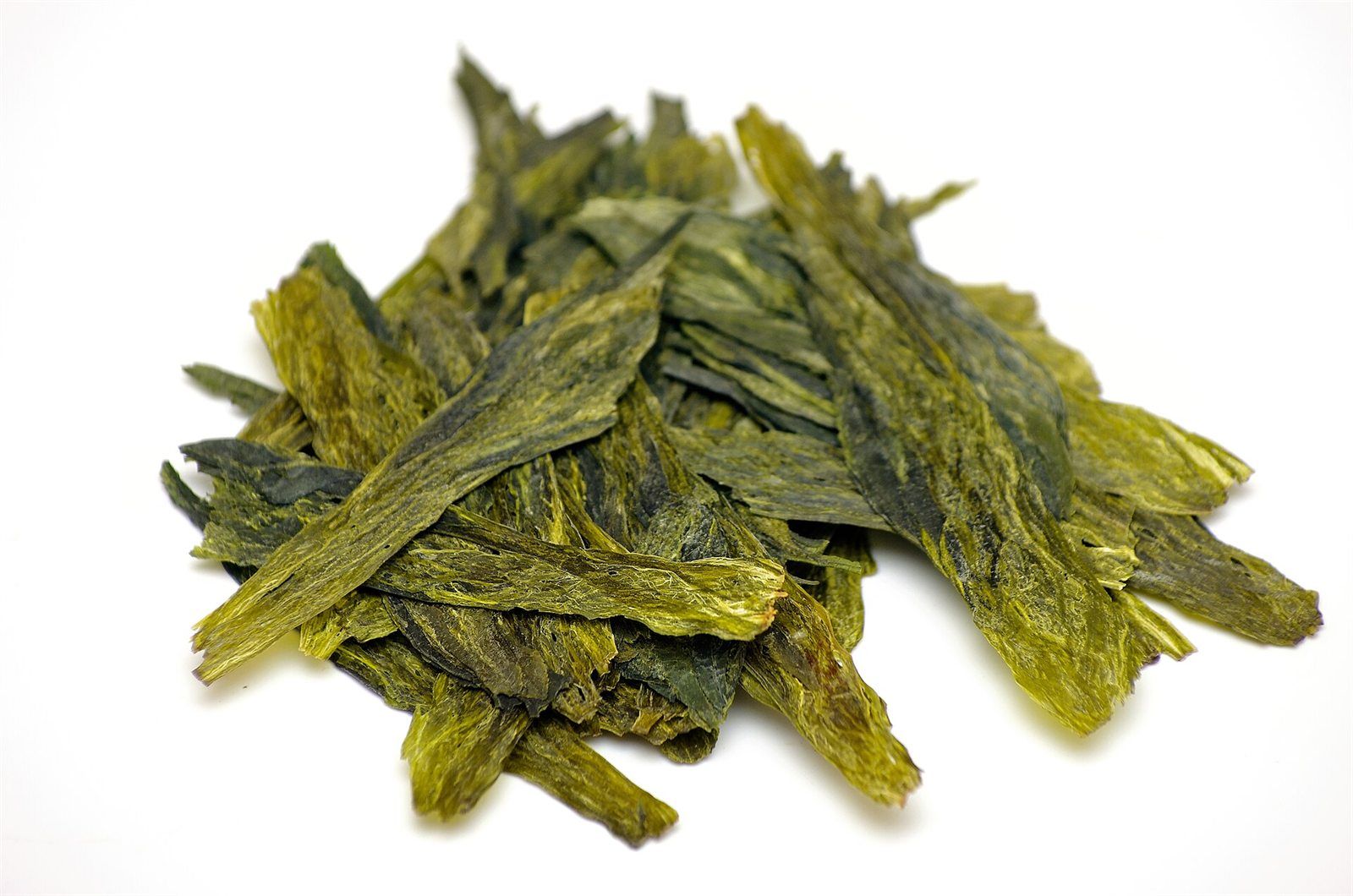
It is unusually long, flat and broad. It does not look like the short flat leaves of Longjing or the curled shape of Biluochun. In a glass, the leaves open like pressed green blades, often showing the classic structure of two leaves holding one bud.
That shape is not a gimmick. It is the result of origin, cultivar, picking standard and a labor-heavy shaping process.
If you are new to tea, the most useful questions are simple:
- What is Taiping Houkui?
- Why is it so expensive?
- How do you tell it apart from similar flat teas?
- What should you check before buying?
This guide answers those questions using the video as a starting point and fact-checking it against public standard and research sources.
The Short Version
| Question | Practical answer |
|---|---|
| What is Taiping Houkui? | A geographical indication green tea from Huangshan District, Anhui. |
| Why is it so long? | It uses large, tender leaves from suitable cultivars such as Shidacha and is shaped into a flat two-leaves-one-bud form. |
| Why is it expensive? | Origin limits, picking standard, hand shaping and brand scarcity all raise cost. |
| What aroma is it known for? | Orchid-like aroma and chestnut-like notes are common quality descriptions. |
| What is the biggest buying trap? | Confusing true Taiping Houkui with cheaper similar flat teas such as Taiping Bujian. |
Taiping Houkui's Official Identity
Taiping Houkui is not just any long pressed green tea.
China's national standard GB/T 19698-2008 is titled "Product of geographical indication - Taiping Houkui tea." The National Public Service Platform for Standards lists it as a current standard.
That matters because Taiping Houkui has a protected regional identity. It is tied to Huangshan District in Anhui, formerly Taiping County.
For a beginner, the key idea is this:
Taiping Houkui is defined by place, material, processing and quality style together. Shape alone is not enough.
Why It Is Called Taiping Houkui
The name can be broken down into three parts.
- Taiping refers to the old Taiping County, now Huangshan District.
- Hou is associated with the Houkeng area.
- Kui suggests the leading or top expression within its tea category, and is also tied to origin stories around processing improvement.
The video describes Taiping Houkui as top-quality tea from Houkeng in Huangshan District. That is a helpful simplification, but the protected production area is wider than one village. The market, however, often treats Houkeng, Hougang and Yanjia as especially important core areas.
Origin Layers: What "Core Area" Really Means
The phrase "core area" appears often in tea sales. It can also be slippery.
| Layer | Beginner meaning | Buying advice |
|---|---|---|
| Huangshan District | The broad geographical indication area | Valid origin foundation, not automatically top grade |
| Xinming, Sankou, Longmen and other townships | Commonly discussed production belts | Useful if the seller gives specific origin |
| Houkeng, Hougang, Yanjia | Market-recognized core villages | Higher reputation and usually higher price |
| Small named plots | Premium micro-origin storytelling | Requires trusted sourcing and traceability |
If a seller says "core area," ask what that means. Does it mean all of Huangshan District? A township? Houkeng? A smaller plot?
Those are not the same thing.
The Role of Shidacha
The source video emphasizes Shidacha, a tea plant type associated with Taiping Houkui.
The point is not only the name. It is the leaf structure.
Shidacha and related suitable materials can produce large, long leaves while maintaining tenderness. That is one reason Taiping Houkui can become such a long tea without simply turning coarse.
This also explains why its harvest timing differs from very early spring green teas. Taiping Houkui is usually not the earliest green tea to appear. Its picking period is commonly after Qingming and before Guyu, roughly mid-April depending on weather and location.
Do not judge every green tea by "the earlier, the better." Taiping Houkui follows its own material and process logic.
How to Recognize the Shape
Good Taiping Houkui is famous for a few visual features:
- long, flat leaves;
- straight body;
- two leaves holding one bud;
- slightly pointed ends;
- visible grid marks from pressing;
- intact wet leaf structure after brewing.
The Chinese phrase often used for the structure is "two knives holding one spear," meaning two leaves around a central bud.
The wet leaf is especially important. After brewing, true Taiping Houkui should still show a relatively complete two-leaves-one-bud structure. If the tea opens into thin, loose, fragmented sheets, be cautious.
Processing: Why Labor Cost Is High
Taiping Houkui can be understood through a simple process map.
| Step | What happens | Why it matters |
|---|---|---|
| Picking | Fresh leaves are selected to fit the required standard | Determines length, tenderness and structure |
| Sorting | Poor leaves, damaged leaves and unsuitable parts are removed | Improves uniformity |
| Spreading | Leaves lose some moisture before heating | Prepares aroma and texture |
| Pan-firing | Heat fixes the green tea character | Stops enzymatic oxidation |
| Pinching/shaping | Leaves are arranged around the bud | Creates the signature structure |
| Pressing | Screens and pressure help flatten the tea | Produces the grid-marked flat form |
| Drying | Multiple drying stages reduce moisture and fix aroma | Stabilizes shape and increases fragrance |
The labor-heavy point is the shaping. The tea is not simply flattened by machine. The leaf-bud structure has to be arranged and fixed. That is why authentic Taiping Houkui often starts at a higher price than ordinary green teas.
Flavor: More Than Freshness
Many green teas are described with words like fresh, brisk, sweet and clean.
Taiping Houkui can have those qualities, but its signature is broader:
- orchid-like aroma;
- chestnut-like aroma;
- thicker mouthfeel;
- strong visual leaf presence;
- better durability across infusions than many delicate green teas.
A Journal of AOAC International study on Taiping Houkui aroma concluded that high-quality samples had orchid fragrance, while lower-grade samples did not. That does not mean every beginner will instantly smell "orchid." It means the floral aroma is not just marketing language; it is a recognized quality marker.
Taiping Houkui vs. Taiping Bujian
The video warns about Taiping Bujian, a common source of confusion.
The issue is not whether Bujian is drinkable. The issue is whether a cheaper flat tea is being sold as authentic Taiping Houkui at a higher price.
| Feature | Taiping Houkui | Taiping Bujian or similar flat teas |
|---|---|---|
| Identity | Geographical indication product with standard identity | More general market category |
| Material | Suitable cultivar and picking standard matter | Material can be broader |
| Process | Shaping and pinching are central | More machine-flattened style |
| Shape | Thick, long, straight, two leaves holding one bud | Often thinner, wider and more sheet-like |
| Price | Usually higher | Often fills the lower price range |
| Buying risk | Expensive but traceable if genuine | Can be dressed up as Houkui |
A quick test: brew the tea and inspect the wet leaf. True Taiping Houkui should show a clear leaf-and-bud structure, not only a flat green sheet.
Beginner Buying Checklist
| Check | Why it matters |
|---|---|
| Standard information | A serious product should show relevant execution standard details |
| SC code | Basic food production license information |
| Anti-counterfeit or traceability code | Huangshan District has promoted geographical indication traceability systems |
| Specific origin | "Core area" is too vague unless the seller defines it |
| Dry shape | Look for long, flat, straight leaves with some thickness and grid marks |
| Wet leaf | Look for intact two-leaves-one-bud structure |
| Aroma | Orchid, chestnut and clean green-tea fragrance should feel natural |
| First purchase size | Buy a small amount, such as 50 grams, before committing |
The last point matters. Taiping Houkui can be expensive, and its style is unusual. A small sample is wiser than buying a large package based on reputation.
Who Will Like Taiping Houkui?
You may like it if you enjoy:
- visually striking green tea;
- orchid-like or chestnut-like aroma;
- thicker liquor than very delicate green teas;
- a tea that can take multiple infusions;
- origin stories and regional identity.
It may not be ideal if you want:
- the cheapest daily green tea;
- a very early, tiny-bud spring style;
- a tea you can buy casually without checking origin;
- strong roasted flavor;
- a low-risk bulk purchase.
Taiping Houkui is not the cheapest green tea and not the simplest green tea. But it is one of the most distinctive.
The Real Lesson
The most useful point in the video is not just that Taiping Houkui is famous. It is that fame creates both value and confusion.
A real beginner should remember four things:
- Taiping Houkui is a geographical indication green tea from Huangshan District.
- Its signature shape is long, flat and built around two leaves holding one bud.
- Its cost comes from origin, material and labor-heavy shaping.
- Similar flat teas can be sold in confusing ways, so check origin, standard information, traceability and wet leaf.
Tea knowledge is not about memorizing more names. It is about knowing what you are paying for.
FAQ
Is Taiping Houkui a green tea?
Yes. It is a Chinese green tea, more specifically a baked or dried green tea style with a geographical indication identity.
Why is Taiping Houkui so long?
It uses large, tender suitable materials such as Shidacha and is shaped into a long flat form around a two-leaves-one-bud structure.
Is Houkeng always better?
Houkeng has very high market reputation, but quality still depends on material, picking, processing, storage and seller honesty.
What is the biggest buying mistake?
Buying a cheaper similar flat tea as if it were authentic Taiping Houkui. Always check origin, standard information, traceability and wet leaf structure.
How much should a beginner buy first?
Start small. Around 50 grams is enough to test whether you like the style before spending more.