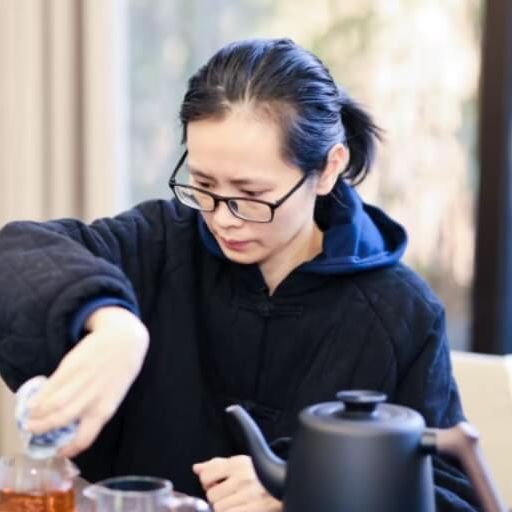
Many people have the same first experience with serious tea.
Someone else tastes orchid aroma, honey sweetness, returning sweetness and salivation. You taste bitterness, astringency and hot water.
That does not mean you are bad at tea. It usually means you do not yet have a map.
The useful idea in the source video is refreshingly simple: tea should not begin with status anxiety. Chinese tea can be ordinary and elegant at the same time. It belongs in daily life as much as it belongs in poetry, ceremony or collecting.
For a beginner, the goal is not to sound like an expert. The goal is to answer three practical questions:
- What type of tea is this?
- How should I brew it?
- What exactly am I smelling, tasting and feeling?
This guide turns the video into a practical beginner framework and adds source-backed context where the terminology can become confusing.
The Most Important Starting Point: Tea Types Are Mainly About Processing
Green tea, white tea, oolong tea, black tea and dark tea are not usually different "tea trees."
Most traditional tea is made from fresh leaves of Camellia sinensis. What changes the final tea is what happens after picking: withering, heating, rolling, oxidation, drying, roasting, compression, aging or microbial post-fermentation.
ISO 20715:2023, an international standard for tea classification, lists the common tea types as black tea, green tea, white tea, oolong tea, dark tea and yellow tea. In Chinese tea language, these generally correspond to hong cha, lü cha, bai cha, qing cha or wulong cha, hei cha and huang cha.
One translation trap matters:
- Chinese hong cha is English "black tea."
- Chinese hei cha is better called "dark tea" or post-fermented tea in English.
That one distinction prevents a lot of confusion.
The Six Chinese Tea Types at a Glance
| Chinese category | English name | Quick visual clues | Processing idea | Common examples |
|---|---|---|---|---|
| Lü cha | Green tea | Greenish dry leaf, clear pale-green or yellow-green liquor | Early heat-fixing limits oxidation | Longjing, Biluochun, Maofeng |
| Huang cha | Yellow tea | Yellow liquor and yellowish leaf base | Similar to green tea, with a yellowing step | Mengding Huangya, Junshan Yinzhen |
| Bai cha | White tea | Natural-looking leaves, often with fine white hairs | Mainly withering and drying, lower intervention | Baihao Yinzhen, Bai Mudan, Shoumei |
| Qing cha / Wulong cha | Oolong tea | Can be green and floral or dark and roasted | Partially oxidized, wide style range | Tieguanyin, Da Hong Pao, Dancong |
| Hong cha | Black tea | Dark brown dry leaf, orange-red to red liquor | More complete enzymatic oxidation | Zhengshan Xiaozhong, Keemun, Jinjunmei |
| Hei cha | Dark tea | Dark leaves, often compressed into cakes or bricks | Post-fermentation or microbial transformation | Ripe pu-erh, Liubao, Anhua dark tea |
The video's beginner memory trick is useful: as the finished tea gets darker, oxidation or fermentation is often heavier.
But treat that as a shortcut, not a law. A heavily roasted oolong can look dark without being a dark tea. A young raw pu-erh can look more like a green tea than a ripe pu-erh. Tea categories are ultimately about process, not only color.
How to Identify a Tea Before You Know Its Name
When you pick up an unfamiliar tea, do not start with mountain names, tree age or expensive vocabulary. Look at three things first.
1. Dry Leaf
Green tea usually has a green base color. White tea often looks more natural and loose. Black tea is often dark brown or black-brown in twisted strips. Dark tea is frequently compressed into cakes, bricks or tuo shapes, though loose dark teas also exist.
Oolong is the broadest category. A tightly rolled, half-ball Tieguanyin and a long, roasted Wuyi rock tea can both be oolong.
2. Liquor Color
Green tea often brews pale green or yellow-green. Yellow tea tends toward an apricot-yellow tone. Black tea brews orange-red to red. Dark tea may become reddish brown, especially when brewed strongly.
Liquor color is not a quality ranking. It is the result of processing, leaf condition, water temperature, steeping time and leaf amount.
3. Wet Leaf
The wet leaf, or leaf base, tells you more than the dry leaf. It can show tenderness, processing style and whether the leaf was broken or whole.
Green tea leaf base is often yellow-green rather than bright green. Black tea leaf base can look copper-red. White tea usually opens in a more natural, relaxed way.
These three checks are enough to build a beginner's first layer of confidence.
Choose a Brewing Method by Situation, Not Ego
Tea equipment can scare beginners because the table can fill up quickly: gaiwan, fairness pitcher, tasting cups, filter, tea scoop, kettle, waste-water bowl, towel and more.
You do not need all of that to begin.
| Situation | Best method | Good tea choices | Main idea |
|---|---|---|---|
| Work, dorm, daily convenience | Cup brewing | Green tea, jasmine green tea, bud-style yellow tea, some white and black teas | Use less leaf and refill when half full |
| Focused tasting | Gongfu brewing with gaiwan | Oolong, black tea, white tea, dark tea and many others | Separate leaf and liquor, brew many short infusions |
| Hot weather | Cold brew | Green tea, white tea, light oolong, scented tea | Long extraction in cold water for a softer cup |
| Cold weather | Boiling or simmering | Aged white tea, dark tea, some roasted oolongs | Use sturdy teas that can handle heat |
Cup brewing is the easiest entry point: cup, small amount of leaves, hot water, drink when it cools to a comfortable temperature. Refill when half the liquid remains to keep the flavor from collapsing too fast.
Gongfu brewing is not as mysterious as it looks. A beginner only needs three tools:
- a gaiwan;
- a fairness pitcher;
- small tasting cups.
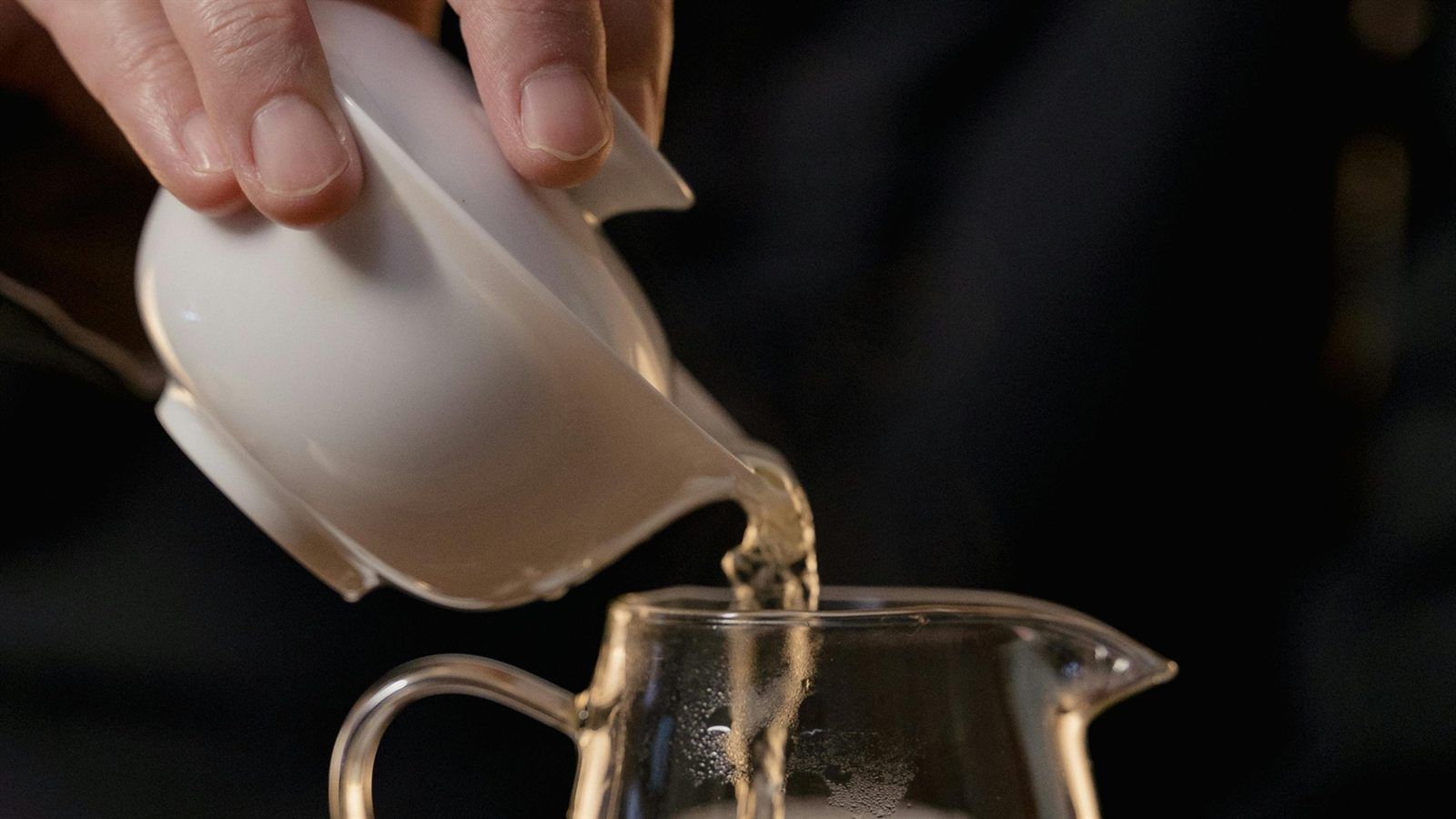
The simplified sequence is: warm the vessel, add leaves, smell the dry leaf, add water, pour out the liquor, drink.
The Three Brewing Variables
If your tea tastes harsh, the tea may not be bad. Your variables may simply be out of balance.
The three variables are:
- leaf amount;
- water temperature;
- steeping time.
| Problem | Likely cause | First adjustment |
|---|---|---|
| Bitter and astringent | Too much leaf, water too hot, steep too long | Shorten the steep first |
| Weak aroma | Water too cool, too little leaf, stale or poorly stored tea | Slightly raise temperature or add leaf |
| Thin liquor | Not enough leaf or too short a steep | Add leaf or extend time |
| Dull and stewed | Long soaking without separating leaf and liquor | Use shorter steeps or a gaiwan |
| Sour or rough black tea | Over-brewing or low-quality broken leaf | Shorten time and avoid aggressive boiling |
Use the table below as a starting point, not as a rulebook.
| Tea type | Cup-brewing starting point | Gongfu starting point |
|---|---|---|
| Green tea | 80-85°C, light leaf, 1-3 minutes | Less common; use cooler water and quick pours |
| White tea | 85-95°C, 2-4 minutes | Lower for fresh white tea, hotter for aged white tea |
| Yellow tea | 80-90°C, 1-3 minutes | Similar to green tea; avoid long stewing |
| Oolong tea | 90-100°C, 2-4 minutes | Hot water, short infusions, gradually extend |
| Black tea | 90-100°C, 2-4 minutes | Quick pours to avoid harshness |
| Dark tea | 95-100°C, 3-5 minutes | Can rinse, brew hot, or boil depending on style |
Different guides give different numbers because tea is not a laboratory formula. Leaf tenderness, roast level, compression, age, water hardness and personal preference all matter.
The best beginner habit is to change one variable at a time. If a tea is too bitter, shorten the steep before changing everything else.
Tasting Tea Means Training Three Senses
Tea tasting sounds intimidating because people use poetic language. But underneath the vocabulary, it is a simple sensory exercise.
You are training smell, taste and touch.
Smell: Build Your Own Aroma Library
Smell the dry leaves, the hot liquor and the empty cup after pouring.
Then connect the aroma to things you already know:
- roasted beans;
- cooked nuts;
- honey;
- peach or apricot;
- flowers;
- wood;
- seaweed;
- rice soup;
- smoke or charcoal.
You do not need to be "correct" immediately. If Longjing reminds you of roasted beans, write that down. If someone else says chestnut, that does not make you wrong. You are building your personal aroma language first, then refining it.
Taste: Sweet, Bitter, Astringent, Sour and Umami
Tea often has bitterness and astringency as its frame. Sweetness, umami and gentle acidity can balance that frame.
Good tea does not mean zero bitterness. A bitter opening can become pleasant if it softens and turns sweet after swallowing. That is one reason people talk about returning sweetness.
Touch: Mouthfeel
Mouthfeel is what the liquor feels like as it moves across the tongue and throat.
Is it thin or thick? Smooth or rough? Watery or broth-like? Drying or lubricating?
Many beginners notice aroma first, taste second and mouthfeel last. That is normal. Mouthfeel becomes clearer after side-by-side tasting.
Beginner Tea Vocabulary in Plain English
| Term | What it means in everyday language |
|---|---|
| Returning sweetness | Bitterness or astringency fades and a sweet sensation appears in the mouth or throat |
| Salivation | The tea makes your mouth produce saliva instead of feeling dry |
| Full-bodied | The liquor has weight and concentration, a little like thin rice soup |
| Cup aroma | Fragrance left in the cup or fairness pitcher after the tea is poured out |
| Tea hairs | Fine hairs on tender buds, common in white tea and some young leaves; not mold |
| Wet leaf | The brewed-out leaves, useful for judging tenderness and processing |
The goal is not to win a vocabulary contest. The goal is to describe what you actually experience.
What Should Beginners Buy First?
The safest route is a six-type tasting set. Small samples let you compare categories without committing to a large bag of tea you may not like.
If you want to start with only one or two categories, white tea and black tea are often friendly. They tend to be sweet, forgiving and less punishing than delicate green teas when brewed imperfectly.
After that:
- choose green tea if you like freshness;
- choose oolong if you like aroma changes;
- choose dark tea if you like heavier, earthy or aged flavors;
- choose yellow tea if you want a rarer, gentle style after you know green tea.
When buying, check practical information before romantic stories:
- tea type;
- origin;
- harvest or production date;
- storage condition;
- whether samples are available;
- whether the seller makes exaggerated health claims.
Tea is for drinking. It does not need to prove your status.
How to Store Tea at Home
The source video gives a good simple rule: seal it, keep it away from light, and keep it away from odors.
Add two more enemies: moisture and heat.
Most teas do well in an airtight, opaque container in a cool, dry, odor-free place. Green tea, which depends heavily on freshness, is often stored in the refrigerator, but only if it is tightly sealed. Otherwise it will absorb refrigerator smells.
White tea and dark tea can age, but aging is not magic. They still need protection from dampness, mold and strong smells.
The easiest rule: tea absorbs odor. Do not store it next to spices, coffee, cleaning products or a humid kitchen corner.
A Simple Seven-Day Practice Plan
If you want tea to stop feeling abstract, try this for one week.
| Day | Practice |
|---|---|
| 1 | Brew one green tea or white tea in a cup; write down only aroma and bitterness level |
| 2 | Brew the same tea with a shorter steep; compare bitterness |
| 3 | Try a black tea; note sweetness, fruitiness or maltiness |
| 4 | Try an oolong; smell the empty cup after pouring |
| 5 | Use a gaiwan for short infusions; write down how infusion 1, 2 and 3 differ |
| 6 | Compare two teas side by side; focus on body and aftertaste |
| 7 | Choose your favorite and write a three-sentence tasting note |
A beginner tasting note can be simple:
"This tea smells like roasted beans. It starts slightly bitter but becomes sweet after swallowing. The liquor feels light and clean."
That is already tea tasting.
The Real Lesson
The best part of this beginner approach is that it returns tea to real life.
You do not need a full tea table on day one. You do not need to memorize dozens of mountain names. You do not need to pretend to taste orchids if you taste roasted beans.
Start with the six tea types. Brew simply. Change one variable at a time. Smell, taste and feel the liquor honestly.
Tea is not an exam. It is a slow calibration of attention.
FAQ
What tea should a beginner try first?
A six-type sample set is the best first step. If you want only one or two categories, start with white tea or black tea because they are usually forgiving and approachable.
Why does my tea taste bitter?
The most common causes are too much leaf, water that is too hot, or steeping too long. Shorten the steep first, then adjust temperature or leaf amount.
Is gongfu brewing better than cup brewing?
No. Gongfu brewing gives more control and shows more changes across infusions. Cup brewing is convenient and perfectly valid for daily drinking.
Are tea hairs mold?
Usually no. Fine white hairs on tender buds are normal, especially in white tea. But musty smell, damp texture or visible abnormal spots can indicate spoilage.
Does green tea need to be refrigerated?
Not always, but refrigeration can help preserve freshness if the tea is sealed well. The key is to prevent moisture and odor absorption.